Cultural Misfit

It was refreshing, yet disturbing to see a lot of the experiences that I’ve had in print.  It was refreshing because it validated my concerns and experiences with gender and racial bias’. On the other hand, it was also disturbing because there were far too many examples of how gender and racial biases shape workplace experiences for many. I’ve shared with colleagues from other schools how the boys at my school are definitely being programmed to believe that they are the best and the brightest despite there being little if any evidence to support this notion.  There are many bright and capable girls and minorities that do fit this description, but they are not being touted as the best. They rarely ever seek out positions of leadership (class president, student council president, and etc) because it is understood that they will not get elected. They usually choose the lesser roles (secretary, reporter, and etc.). This mentality was foreign to me when I first started at the school. I questioned it and was told by co-workers that they simply don’t apply or run for these positions.  When I questioned the kids they told me that they knew they would never get it, because the popular boys always get these roles. I also found that such positions were also part of family dynasties. In order for outsiders to truly understand the lunacy of this concept, it must be noted that this is a middle school. This whole family dynasty thing has infiltrated the school faculty. The student of the year is always teacher nominated and selected, and of course, in keeping with the local culture, it is always a white male.

Being a black female I’ve always felt like what Wachter-Boettcher describes as a “culture misfit”.  I am currently the only black middle school core teacher (there are two others: 1 elementary, and a gym coach) at my school, and I so don’t fit in.  I am not interested in getting drunk at the school Christmas party, and riding four-wheelers or showing my breasts to my colleagues once I’ve overindulged. Of course, I am not invited to all of the Friday night hangouts, when all of the real school decisions are made, apparently, only those that are willing to get drunk are worthy enough to attend.  I am certainly not a “culture fit”. Quitting is not an option for me as it was for the women interviewed, I’ll continue to request a transfer as I do every year. I guess I fit into the “edge case” category. I strive to be the Shonda Grimes of my school every year, but unfortunately, I am met with the great resistance.

Work Cited

     Wachter-Boettcher, Sara. Technically Wrong: Sexist Apps, Biased Algorithms, and Other Threats of Toxic Tech. W.W. Norton and Company, 2018. Chapters 1-3

ID Play: Masks

Online and offline Identities are essentially interchangeable. The two identities are in essence static, they are only visible in key situations.  While offline any characteristics that may be seen as undesirable in particular settings may be suppressed the characteristics of that identity is still present.  The use of anonymity simply provides a sense of security to allow certain perceived unacceptable behaviors or opinions to be expressed without fear of retribution.  As Philips and Milner put it on page 72, the two identities can be viewed as ambiguous masks. Although I view the masks as interchangeable the ambiguity is still present. Which of our two identities is our true identity? After reading this chapter one thing has become clear to me I don’t control my mask as I initially thought I did.  I thought that having an anonymous online account on a social media platform (Instagram) meant that I controlled my mask but by virtue of the fact that my profile is anonymous means that I, in fact, do not control my mask.  I feel as though I am forced to be anonymous simply to be able to enjoy and like pop culture posts. Fear of being misunderstood for following and leaving laughing emojis under the posts a teacher created page that pokes fun of the occupation is one of the driving forces behind my anonymous profile.  

Work Cited

    Phillips, Whitney, and Ryan M. Milner. The Ambivalent Internet: Mischief, Oddity, and Antagonism Online.

Are Digital Trends Infiltrating our Ethical “Firewalls”?

Are Digital Trends Infiltrating our Ethical “Firewalls”?

Parish praises Steven Levy, the author of Hackers: Heroes of the Computer Revolution. Although he uses the term loosely in efforts to draw readers in to purchase a book or enroll in a course about computer programming, I found the negative connotation followed by Hacker Ethics ironic and somewhat problematic:

  • Access to computers should be unlimited and total.
  • All information should be free.
  • Mistrust authority—promote decentralization.
  • Hackers should be judged by their hacking, not bogus criteria such as degrees, age, race or position.
  • You can create art and beauty on a computer.
  • Computers can change your life for the better.

Since the early 80s, computer hacking has cost companies millions each year and has even resulted in violations of consumer privacy. And here we are….

Although, I agree that continuous computer programming is necessary. There is value in taking systems apart and understanding how they work.  However, in this social media  climate where things are easily taken out of context, over looked, underestimated, and under-researched, a brief education to the masses on what constitutes as legal computer activity would add value to this article as well.

Because social media encourages people to share information, even students as young as middle schoolers are encouraged to be digital citizens who comment on cultural, social, and political concerns in global and local communities.

Likewise, Beck’s article focus on expanding rhetoric and composition so that that students can explore writing for digital algorithmic surveillance trends.  On one hand, this makes sense. Beck makes strong arguments. By drawing attention to student participation in computer-mediated environments, we are able expose the inequalities that thrive in online spaces.

One the other hand, personalized and self-generated algorithms store one sided information over time, thus deeming the data harvested limited, biased, and onside. This would also limit a person’s ability to view political, social, and cultural ideas objectively.

There are no shortages of one sided views and rhetoric; however, responsible instruction and critically analysis of the legitimacy of rhetoric is always valuable to the composition community.

Beck, E. (2017). “Sustaining Critical Literacies in the Digital Information Age: The Rhetoric of Sharing, Prosumerism, and Digital Algorithmic Surveillance.” Retrieved from https://wac.colostate.edu/books/social/chapter2.pdf

Parrish, A. (2016). “Programming is Forgetting: Toward a New Hacker Ethic.” Open Hardware Summit presentation.  Retrieved from  http://opentranscripts.org/transcript/programming-forgetting-new-hacker-ethic/

Wachter-Boettcher, S. (2017). Technically Wrong: Sexist Apps, Biased Algorithms, and other Threads of Toxic Tech.)


The Ambivalent Internet

After reading the section on RIP trolling, I was reminded of having visited a local funeral home’s website to view the obituary of a family friend and being disappointed after reading a post from a RIP troll.  This troll used his/her religious views as a tool to troll the family. The online guestbook page had several posts from out of town posters that felt an inappropriate need to add insensitive comments directed to the family of the deceased.

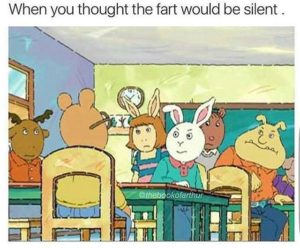
While I personally enjoy the memetic images that are often posted to Instagram, I understand how they may cause some ambivalent feelings for others.  Many childhood icons are transformed into humorous images that are confusing for today’s youth. Once such memetic image is that of the PBS “Arthur” characters. While I am familiar with the actual cartoon, most of the kids that view the memes aren’t and they truly do not understand the humor that is being expressed.  The true humor is lost on them. The characters from this cartoon are wholesome, designed to teach some sort of lesson, and would never say or do any of the things that the memes are portraying. I honestly think that most memetic images are far too complex for today’s youth, they often don’t understand sarcasm.

There’s a statement on page 156 of chapter 4 that I think sums up the theory of Digital divergences and runaway narratives. The statement basically states that each time a meme is made it is realigned to fit the needs of the audience, but in doing so it also transforms the item making it that much more ambivalent.  I saw a post today that was intended to highlight the inspirational actions of a certain group. While it was posted to elicit positive comments it instead invoked ambivalent feelings for me. I knew the intended purpose of the posting, but I still found the post humorous, which in turn made me feel like a jerk for laughing.

Work Cited

     Phillips, Whitney, and Ryan M. Milner. The Ambivalent Internet: Mischief, Oddity, and Antagonism Online.

“Why Heather Can Write”

A question was posed in the middle of this article that questioned the role of publishing and online feedback by youth while they are in high school.  I think that the role that online feedback and publishing has in the lives of youth is very powerful, because if they are participating in this process at such an early age they will only get better as they age.  The use of online tools such, “Sugar Quill” provide excellent platforms for youth to engage in the sharing and editing process.


Heather’s web-based school newspaper is such a success because the youth that participate in its composition are able to relate to the articles that are written, because that can relate to each other.  I find that in order to obtain and retain the interest of today’s youth they have to connect with the text. Gone are the days of expecting our youth to read, retain, and explain texts that they simply cannot relate to.  Most of the participants were probably initially intrigued in the production newspaper because it was being produced via a digital platform. The critiquing of a peers work is something that they tend to enjoy as well it’s almost as though critiquing is part of the DNA.

Is the world really good or bad?

Is the world really good or bad? Or is there another way to see it?

I remember when I was told that if I wanted a product designed to fit me perfectly, it would be very expensive. Expensive was code for bad. No one wants to pay more. We’re supposed to pay less according to the good/bad view, and less is good.

I remember the bell curves from standardized testing. I was told that “normal kids” scored in the middle. In the good/bad view, “normal kids” was code for good. The kids to the left of the hump were certainly bad at something. The kids to the right of the hump were probably known as weird — which, like expensive, was another way to say bad.

All of my memories have traces of some “that’s good, this is bad” type of segregation, each one pointing out that good, in the cultural, socio-economic, demographic, sense, was really another way of saying average. “Be a good boy so you can grow up to be a good man,” they said. And being a good boy meant “fitting in” and doing what the others were doing. Being a good man meant earning a stable income at a “good company” … that’s code for a company that pays well and hires thousands of people.

I grew up with this bias about the concept of good and bad and how that pertained to fitting in, career, success, customized products, standardized tests, and more. It was so engrained that even having this bias was considered good. Which meant that not having this biased, good/bad view of the world was a sign you were weird (again, a bad thing).

All of this changed when I read Language and the Pursuit of Happiness by Chalmers Brothers (Dr. Chelsey, pardon the extra reference … I’ll connect everything shortly). That’s when I learned to set aside the question, “Is this good or bad.” What if I asked instead, “Does this work or not work?” It was my first exercise in how the power of words can reframe a question (without biases, for example) and arrive at a completely new set of outcomes.

So when author Sarah Wachter-Boettcher describes how product designers miss the mark because they can’t relate to audiences, I’m particularly drawn to how the decision makers deliberately disregarded readily-available facts. When the author points out how Northpointe’s COMPAS software misidentifies potential recidivists to the point of being racist, it’s difficult to ignore how strongly the company intentionally overlooks factual evidence as they deny making mistakes. As the author reprints excerpts from tech company annual reports showing a published desire to diversify hiring but show no noticeable change in that pattern, I’m compelled to notice that these seemingly-brilliant people are ignoring the very facts they are printing and evidence that there are plenty of “underrepresented” candidates hoping to be hired.

Allison Parish highlights this willful ignorance of the results (results being particular types of facts) of a the popular hacker ethic. The people who buy into the ethic are presumed to be some of the smartest around, yet the results of their ethic-based actions effectively demonstrate that they destroyed the ethic. They ignore the results of their actions and continue their belief that they are champions of the ethic.

Estee Beck points this out again in the seemingly willful ignorance of social media companies to truthfully identify the word sharing as something distinctly different than what they are asking their users to participate in, which is truly prosumerism (you might say the user is being used).

In each piece, the authors expose biased viewpoints evident in the tech world they know so well. But Beck says it best when it comes to dissolving ignorance of facts, outcomes and results when writing, “I argue that it is up to educators, especially writing teachers, to sustain critical literacies in their classrooms in service of connecting, and possibly subverting, the market-driven prosumerism for an exchange benefiting humankind without financial incentive.”

In short: Words matter.

Beck implies that sharing, in the social media context, isn’t sharing at all. If users understood this, that literacy might reframe the whole concept.

Changing the words we use can ignore or include the facts. Changing the words used to frame a problem or solution can determine if there’s even a problem or solution to begin with.

The story in my head, as I read each article, is that all of the people, focus groups, executives, recruiters, and more looked at their products, hiring practices, marketing campaigns, and more and, at some point, said to themselves, “This is good.”

And that means good in the “how-I-was-raised-to-define-good” sense of the word:

  • That means average is good, so build products for the average person.
  • That means customization is expensive, and since expensive is bad, not customizing things to each individual must be good.
  • That means “people like us” is good, so hiring practices that bring in more people like us must also be good.
  • That even means buying into an ethic that destroys authority can be seen as good, because authority means the “top 1%” … essentially not average … and we’re defending the “average man” (See what I did there?) and that’s good.

Every person who built a product or acted with bias in any way quite possibly (or most likely) thought they were doing “good” in the good/bad view of how I was programmed to see the world.

This sense of good has its roots in the dawn of computing. “The Modern History of Computing” runs replete with examples of white men solving problems only white men had and probably saying, “This is good.” Because it was cheaper. Because it solved the “average” person’s problem (white men being the “average” person, of course). Computing is rooted in a time when this bias not only existed, it was reinforced in every way.

Today, consumers are diverse and, as Wachter-Boettcher states, the internet now the underpins all business in all sectors. Suddenly, in this context, the old way of looking at things starts to break.

Some online entrepreneurs tried on a new lens through which to see things. Let’s suppose some used the aforementioned work/doesn’t work lens. By changing the comparison from good/bad to work/doesn’t work, dramatic shifts of thought began to occur. We saw breakthroughs few sectors other than technology are capable of creating.

Chris Anderson’s “The Long Tail” tells of music retail services who looked at the brick-and-mortar model of promoting only mass-market hits and asking something like, “On the internet, does that work or not work?” It’s easy to think that the store model could simply be shifted online and top hits would be the most popular. But, as it turns out (and as Wachter-Boettcher points out), people aren’t average. They were only buying what was popular because that’s all there was available in the physical retail model. But music audiences that have every choice imaginable will choose exactly what fits them … because they can.

Is it cheaper? That’s not really the question anymore.

That question is part of the old good/bad paradigm. The new question is, “does it work or not work?” As Anderson points out, online audiences are collectively spending more money on music and movies than when they had only a retail option. So yes, it works.

Works/doesn’t-work-thinking is just one example of how framing the question can dissolve bias and lead to better-fitting products and services in an internet-connected world. Can I get exactly what I want instead of the average pop version? Sure, because that works. Can I pay a lot or a little? With lots of choices, pay whatever works for you.

These are answers the good/bad paradigm was incapable of achieving because good/bad thinking (that’s just one example) is inherently biased to what we were taught was good or bad. When our thinking is framed differently, such as in the works/doesn’t work approach, we are compelled to look at facts such as profitability, outcomes, and effects of our product designs, actions, and policies.

As Wachter-Boettcher, Parrish, and Beck eloquently demonstrate, the words we use to define the models (e.g. designs, policies, practices, and algorithms) we put in place can be more important than the models themselves. As they each point out, the majority of tech leaders describe the things they do and create as “good.” These authors are asking them if it works.


Brothers, Chalmers. Language and the Pursuit of Happiness. New Possibilities Press, 2005.

Wachter-Boettcher, Sarah. 2017. Technically Wrong: Sexist Apps, Biased Algorithms, and other Threads of Toxic Tech.

Parrish, Allison. 2016. “Programming is Forgetting: Toward a New Hacker Ethic.” Open Hardware Summit presentation. http://opentranscripts.org/transcript/programming-forgetting-new-hacker-ethic/

Beck, Estee. 2017. “Sustaining Critical Literacies in the Digital Information Age: The Rhetoric of Sharing, Prosumerism, and Digital Algorithmic Surveillance.” https://wac.colostate.edu/books/social/chapter2.pdf

“The Modern History of Computing.” 2000. Stanford Encyclopedia of Philosophy. https://plato.stanford.edu/entries/computing-history/

Anderson, Chris. 2004. “The Long Tail.” Wired Magazine. https://www.wired.com/2004/10/tail/

Technology’s Ideological Collision Course

Image result for image of car playing chicken

According to Sara Wachter-Boettcher, the tech industry is a multi-billion dollar industry that’s built upon the backs of the misogynistic thought and presumptions that limits the field to like-minded people. Diversity in the tech industry is mere rhetoric, and while corporate bangs the diversity drum, it also beats the tune of exclusionary practices. Although the statistics proffered were at a higher level than I would have imagined, the overall sentiment did not surprise me.

Having spent many years in the marketing department of a Fortune 100 company, the amount of high level executives continues to skew toward the white male, and while there have been strides to extend diversity in the corporate workplace (of which we primarily speak when we talk about IT functions) there is an overwhelming amount of status quo that continues.

Wachter-Boettcher speaks of personas, the stereotypes that are created for marketing whatever is being “sold”, this too extends to the people that corporations want to “fit” into the position, or even the environment. This too is the default position of the hiring manager and HR. Consider the stories of people hired because of their skills that do not share anything in common with the people with which they spend 40+ hours a week with. These situations are often short-lived. Our worldview is conditioned, but these can change. Although there may be conditions that one finds uncomfortable, actions can often counter these preconceived ideas, and lend to a bigger world-view by all. For example, historically men were secretaries, but at the turn of the twentieth century these roles transitioned to women. It must have been a growing experience for those who had been male secretaries, or men that had male secretaries, to see this role “relegated” to “women’s work”. Preconceived ideas even play a part when avoiding stereotypes, such as when Wachter-Baettcher discusses the casting for Rhime’s production company in that they “cast whoever feels right” (48). Great idea, but what is that really but a form of bringing in “what I think is right”.

Everything, and nothing, is normal; as Wachter-Boettcher says, “The only thing that’s normal is diversity” (47). Normal is a limiting factor in seeing beyond the parameters of status quo. It also supports the ideals of “fit” and “right”. What is right for one, isn’t right for another. What is right for most, isn’t right for all. I remember a meme that was out in the 80s, “Why be normal”. I embraced this sentiment, and  have continued to do so. That said, I still prefer to spend the majority of time with people that think, and act, like I do. Why would technological mind-set be any different? As we read in Ambivalent Internet, this kind of adherence to the known excludes too many others that do not fit into a singular mode, where “[w]eird content outnumbers ‘normal’ content at a 2:1 ratio” (8), and the importance of understanding the extent and ramifications of this weirdness proceeded to develop a “Weird Internet panel” to determine what is indeed weird, and what weird really means. That is fascinating! Yet, will there ever be consensus?

As we think about old tech and new tech convergences, it becomes an interesting prospect. Old tech isn’t that old afterall, but as Jenkins examines this phenomenon, he uses a word that fits what we see in Wachter-Boettcher’s piece, this word is “collide”(2). Jenkins is speaking specifically to media, which of course is an arm of technology, but I think we can extrapolate that thought to the technological industry as a whole. Old thinking must be used alongside new thinking as culture demands it. Technology is no longer a workplace phenomena, it’s impacting the law (as seen in recidivism prediction), education (a highly diverse population), religion, politics, etc. Jenkins states, “Media barons of today will be grasping to hold onto their centralized empires tomorrow” (5). Again, he singles out media, but this is what Wachter-Boetter asserts is happening in the field of technology. Old school power and money want to run the show.

Power is not easy to give up once it is held. We see “the edge” or “the stress” seeking that same power.  Tech leadership’s “meritocracy” is a mentality of “if it ain’t broke, don’t fix it”. We are seeing a move toward “it is broke, so let’s fix it”. But how do we fix a megalithic conglomerate with many tentacles? Understanding that fit is important but is not without exclusionary components, and diversity is about more than gender or race; it’s about decentralizing group think, and integrating cultures to reflect as many of the populist as possible in order to expand said fit, while not forgetting that culture is a two-way express lane. If we cannot navigate the road together we will crash and the biggest vehicle wins – but at what cost? A lot that we have read so far speaks to technology’s need to consider the creator, and the user as co-voices, and co-creaters. Can this happen? Is it achievable? Or do the masses prefer to be dumbed-down, relying on a default – whatever.

Works Cited

Image: VoxEurop.eu. Accessed 6 Mar 2019 https://voxeurop.eu/en/content/cartoon/4946327-playing-chicken

Jenkins, Henry. Convergence Culture: Where old and new media collide. New York University Press, 2006.

Phillips, Whitney., and Ryan M. Milnver. The Ambivalent Internet: Mischief, Oddity, and Antagonism Online. Polity Press, 2017.

Wachter-Boettcher, Sara. Technically Wrong: Sexist Apps, Biased Algorithms, and Other Threats of Toxic Tech. W.W. Norton & Company, 2018.


Convergence Culture

If Convergence Culture is the Future….

Reading Jenkins’ 2004 “Why Heather Can’t Read” first, I have strong opinions about the themes of this week’s readings. In short, conflict exists over the notion that homeschooled students  spend time critically analyzing and rewriting fiction, such as the works of Harry Potter. On one hand, Education Professors, such as University of Wisconsin-Madison Professor James Gee marvel at students’ ability to become more active, engage, analyze, and publish at such a young age.

However, Literary “purist” question those students’  ability to develop into creative writers at such a young age. The opposing argument that I gather from the text is that these students are likely not reading and writing at the level that they would if they were in traditional school setting studying classing works and being taught by teachers.

As someone who has taught extremely gifted students whose writing abilities exceeded most of my undergraduate students, I can attest that there are students whose intelligence intimidates the average teacher or professor. They benefit from independent student and they should have the option or freedom to expand their writing craft with literature that’s interesting.

This is not a question of whether Heather “can” or “cannot ” read. The question is why try to measure Heather’s ability to read based on her desire to read what “society” or traditional public school dictates she should read?

Regarding Democratizing TV and Reader-Moderating News Content, I saw this as very similar to the previous argument.

If reader moderated content was created to foster unity, empathy, and civil discourse, I think that students like Heather Lawver are ahead of the curve.

I am not so sure this social media and attention seeking society is responsible enough to rewrite core stories unless those core stories are for fictional and entertainment purposes.

Jenkins, Henry. 2006. Convergence Culture: Where Old and New Media Collide. New York

University Press. (PDF)

Read the Introduction, Chapter 5, and Conclusion (A version of Chapter 5 is also

available

https://www.technologyreview.com/s/402471/why-heather-can-write/

How TV’s Jackass and Revolutions happen.

I’m intrigued by Anonymous. I’m not alone. Coleman’s description of the group and her participation (at least conversationally) sheds light on a group that intrigues many of us. There are some hackers, she writes, but Anonymous isn’t a group of hackers. It’s more like a group of people having an often-pointless conversation. And the conversation is very familiar.

Like the group of men around a campfire who confused Milner by praising and cursing the same subjects. I know that group. I have uncles like that. Cousins, too. And I know this conversation well. I’ve enjoyed it and I’ve been confused by it.

Both the confessions (in a way) of Coleman and the often-hilarious analysis from Whitney and Milner remind me of those days, standing in a circle, killing time with a bunch of guys, drinking beer, and … making no sense at all. The older I grew, the more common and familiar this type of conversation became. It was everywhere. And I was often confused. And I was often amused.

In the same conversation, someone could be hailed as a genius and an idiot. The person who was trampled (conversationally) the week before was now a hero. The idea of doing something crazy was talked about as if it would never happen, then a few people would do it for fun.

This experience is profoundly human. The same people who sit and have coffee in the afternoon might, under different circumstances, participate in a protest. It really depends on the conversation at the time, the freeness with which people feel they can speak, and the audacity of some person who’s willing to try out an idea.

I’ll use the American Revolution as an example (though I may argue, at some point, that it was really the US Revolution, but that’s for another post). Quite a few historians (and Samuel Adams Brewing) would remind us that many of the early ideas of a revolution were created in bars, where exactly this aforementioned type of conversation could have taken place. Nearby (and in the bars) were groups of Freemasons who, through oaths of loyalty, found a space to speak on any subject in a similar manner. Whether bar talk or secret meeting, people were speaking freely. Somewhere in that discussion, both love of the monarchy and the idea that it should be overthrown were tossed about. Somebody pitched a crazy idea. Next thing you know, a bunch of guys dressed as Native Americans (not their term) pitched a bunch of tea in the harbor. The conversation spread … freely. Secretly. Then actively.

The combination of a trusted space and free expression bring up our love of contradiction. It’s confusing. It’s also familiar. Create a space where people can “be themselves” and this is what happens … at least every time I’ve seen it. Today the internet is that space.

Anonymous is just as much a group of people with a safe space to have conversations as Milner’s drunk uncles around a campfire. And every now and then, any one of those people could shoot off a crazy idea and … occasionally … someone does it.

Aristocrats historically feared and even suppressed free speech and public forums. It’s unpredictable. And unpredictable is the opposite of order. And order is how to maintain the system of whatever it is you were trying to keep together to preserve wealth and power and all else. The real treasure of history’s secret societies was their ability to create a space to discuss anything. Simple things. Funny things. Oddities. Revolutions. Good ideas. Crazy ideas. But it’s never just the secret societies who pull this off. Put a group of people in a downtown salon, a bar, a hunting camp, or around a kitchen table and, once they feel they can speak freely (i.e. trust one another), these are the things that happen.

Anonymous and weirdness on the internet in general aren’t oddities at all. They are reflections of who we are when we’re with trusted people and feel free to speak without holding back. Anonymous and the internet are groups of people in spaces where they can have free conversations about anything. And occasionally, someone gets a crazy idea. And occasionally, someone in that group knows how to do that crazy idea. Then you end up with a television show like Jackass or a political revolution. But mostly Jackass.


Phillips, Whitney and Milner, Ryan M. 2017. The Ambivalent Internet. polity press.

Coleman, E. Gabriella. 2012. “Am I Anonymous?” Limn 2: Crowds and Clouds. https://limn.it/articles/am-i-anonymous/

Power Transfer in Convergence

What I took away in reading about convergence was the inevitability of change, and how we navigate those transitions. Convergence is the new generation thinking of functionality that meets the technological needs still present in a more efficient and flexible capacity. The “New Orleans Media Experience” itself was a reflection of convergence where the public met the experts to bridge the divide, and turns into a giant technological brainstorming. Fascinating.

As I read more deeply, I found myself returning to the question, “Is convergence the act of the horse pulling the cart, or the cart pulling the horse?” It seems to me, that there is a dance of sorts between the two. This thought is supported by Jenkins claim that, “convergence refers to a process, not an endpoint” (16). It is easy to see this as technological growth itself is a process. If you stop, you lose; or in Jenkins words, “Producers who fail to make their peace with this new participating culture will face declining goodwill and diminishing revenues” (24).

I was reminded of convergence, and Jenkins example of how we watch television has changed. When I was watching an Amazon Studios series called The Last Tycoon. Not only does the fact that Amazon, a streaming on-demand way of viewing television, portray the point of moving from mass television and renting dvd’s, etc., the content of the show was a reflection of convergence. The series portrays Hollywood past, before the days of unions and legalities that took away the power of the corporate machine that was in place, and also reduced the amount of abuse that was accepted as expected. The people voiced their needs, and battled toward a process that better suited humanity.

As discussed in Jenkins book, convergence is a democratic process that offers the people with vested interest to participate in the direction that their technology of their choice proceeds. Yes, there are limitations to the amount of influence that that consumer can wield, but it is a far cry from the days of Hollywood. Jenkins “argued that convergence encourages participation and collective intelligence” (256), and collaborating to ensure that the media and technology work for the people, and not just the inverse is the way of the future. It is the right direction.

Works Cited

Jenkins, Henry. Convergence Culture: Where Old and New Media Collide. New York: New York University Press, 2006.