After reading the section on RIP trolling, I was reminded of having visited a local funeral home’s website to view the obituary of a family friend and being disappointed after reading a post from a RIP troll. This troll used his/her religious views as a tool to troll the family. The online guestbook page had several posts from out of town posters that felt an inappropriate need to add insensitive comments directed to the family of the deceased.
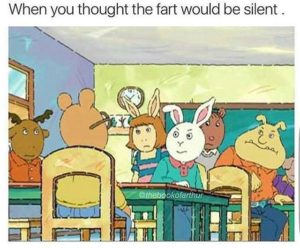
While I personally enjoy the memetic images that are often posted to Instagram, I understand how they may cause some ambivalent feelings for others. Many childhood icons are transformed into humorous images that are confusing for today’s youth. Once such memetic image is that of the PBS “Arthur” characters. While I am familiar with the actual cartoon, most of the kids that view the memes aren’t and they truly do not understand the humor that is being expressed. The true humor is lost on them. The characters from this cartoon are wholesome, designed to teach some sort of lesson, and would never say or do any of the things that the memes are portraying. I honestly think that most memetic images are far too complex for today’s youth, they often don’t understand sarcasm.
There’s a statement on page 156 of chapter 4 that I think sums up the theory of Digital divergences and runaway narratives. The statement basically states that each time a meme is made it is realigned to fit the needs of the audience, but in doing so it also transforms the item making it that much more ambivalent. I saw a post today that was intended to highlight the inspirational actions of a certain group. While it was posted to elicit positive comments it instead invoked ambivalent feelings for me. I knew the intended purpose of the posting, but I still found the post humorous, which in turn made me feel like a jerk for laughing.
Work Cited
Phillips, Whitney, and Ryan M. Milner. The Ambivalent Internet: Mischief, Oddity, and Antagonism Online.
I think you’ve hit on a great take-away from Phillips and Milner’s book– a greater awareness of ambivalence within ourselves. the way you’ve described your various feelings about memes, trolls, etc. shows just how up and down, ambivalent or not, we can feel when faced with the onslaughts of digital culture streaming around us. I know I definitely sympathize with seeing arguments or comments online, knowing what their intended purpose likely is, but still feeling kind of weird or out-of-step with that purpose.
taking stock of our own reactions and being aware of how we’re being influenced (or not) is valuable. I think Estee Beck’s article from our recent readings pushes towards a similar argument– critical awareness and critical literacies are very needed.