Dyson’s commentary in Edge provides the proper ending (and periodical name) for this semester.
While Dyson doesn’t specifically reference “The Modern History of Computing,” he walks us through a similar, yet darker, evolutionary process. In the beginning, we made machines to do our work. We called them computers at some point, yet they were really tools to perform work on our behalf. And the computers got better at performing work … now they’re so good at it they provide for needs we didn’t know we needed (my watch told me how often I stood up today).
When do the computers become alive? That’s not the question, Dyson argues.
I recall my earlier post about cells becoming tissues, tissues becoming organs, organs becoming systems, and systems becoming humans. A cell is a living, autonomous, being, just doing its thing in its own universe. Yet every cell is part of this collection we call a human being, bestowing us with collective intelligence.
Up until now, we seem to have had the notion that building the perfect robot or android or intelligent computer took a top-down approach. We thought computers would be the brain and send commands to the rest of the bot and take in sensory information, etc. But that’s not how human systems work at all. Most of the commands in our body aren’t made consciously. And that intelligence reaches far deeper than autonomous commands. The brain doesn’t tell cells to divide. The brain doesn’t tell white blood cells to attack infection. The brain doesn’t even get involved when we accidentally touch a hot pot and quickly jerk away. We are a collection of autonomous beings and, in that light, our brain looks like less of a king and a kingdom and more of a tour guide and a theme park.
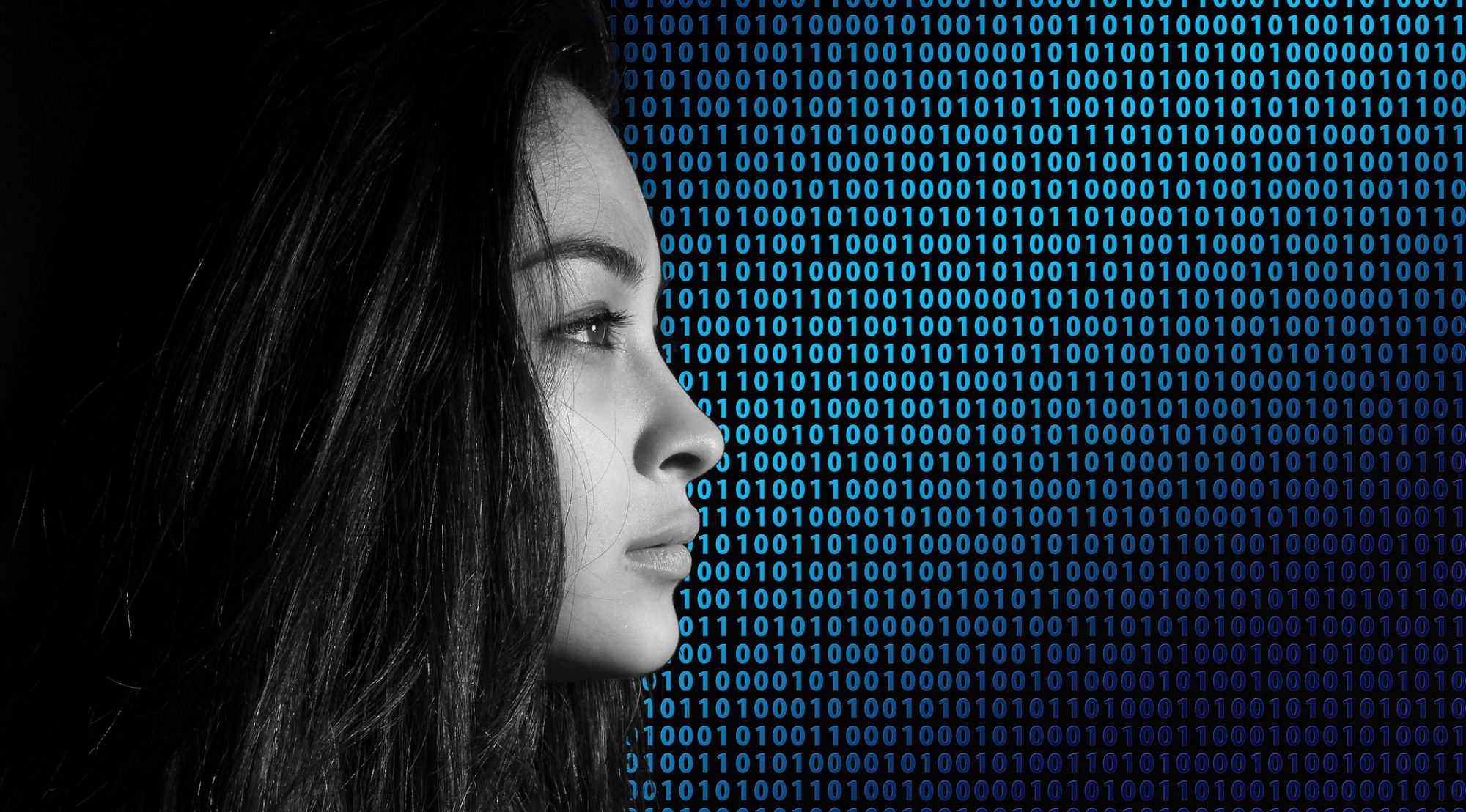
That’s the role of computers in Dyson’s vision (nightmare?). In Dyson’s understanding, humans have become the cells of the computer system. We’re parts of the whole and our behavior creates the collective intelligence of the system, much like the behavior of cells in our own bodies.
“The search engine is no longer a model of human knowledge, it is human knowledge,” he writes as I think of how often police look up someone’s recent search terms if they’ve transgressed a law. Even our questions add to the intelligence of the system. And the system (or enterprise, or computer) knows us better each time we use it, eerily guessing what we’ll search for next based on countless bits of data it has gathered about us … and everyone.
When we were kids we used to proudly exclaim, “I knew you’d do that!” when we accurately predicted what one of our friends would say or do next. It was an accomplishment to know someone well enough to make such predictions.
Now Google knows what we’ll search. Facebook knows who we’ll like. Amazon knows what we’ll buy. Spotify knows what we’ll listen to. And here’s a fun one … Tesla has equipped all of its cars with every sensor necessary for full autonomous driving and – when its drivers have made enough journeys, dodged enough accidents, and recorded enough information being absorbed by Tesla’s AI – they plan to turn on automated driving in every vehicle.
Nearly every science fiction fan has discussed the ability of machines to become intelligent to the point of becoming human. We thought we would play god and create life. We thought we would build that machine to be our friend. We thought we might build that machine to be our slave. We thought we might build that machine to solve our problems.
But we didn’t build that machine.
We became it.
Dyson, George. 2019. “Childhood’s End.” Edge. https://www.edge.org/conversation/george_dyson-childhoods-end
“The Modern History of Computing.” 2000. Stanford Encyclopedia of Philosophy.
https://plato.stanford.edu/entries/computing-history/