Digital natives, what an interesting term. When I think of natives, I think of someone indigenous to the area. In this context, we are all, and none of us, are digital native. Yes, I understand the explanation that it describes those who have always had this technology in their lives, but I beg to differ as this being an accurate description. Maybe it’s a case of digitalitis that I am suffering from, or could it be technologicaleosis. Either way, I may have to get a ITectomy.
Before having mental circumcision let’s talk about Anna Everett’s chapter in Race After the Internet, “Have We Become Post Racial Race Yet?”. This article speaks of digital natives supporting a political platform that embraced the internet. Technology and politics go together. In order to reach the masses, and accumulate power, government and/or commerce need to use the means that reaches the widest audience. 24/7/365 news reporting is the way to go. Gone is “breaking news” because it’s all breaking news, at break-neck speed. Pair that with the UGC explosion, and there’s a flood of information (and misinformation) at the ready. As mentioned in the article, Dean Howard’s campaign embraced technology with a meteoric rise in popularity until he went a little crazy and this same outlet that supported his journey also supported his fall, as this outlet can help and hurt the object of attention (149).
This idea is supported by the obamaisms. Some of these were beneficial, and some were not, and some were downright offensive. Obama was fully engaged in digital media’s technological highway for his campaign, fully embracing the extent of it’s potential at the time, but Donald Trump has trumped his adoption and taken it to a higher level. Donald Trump’s incessant use of social media is bashed by some, and lauded by others. Another example of mixed use and acceptability is Obama’s prefix. As displayed in my first paragraph, this type of play on words (names) isn’t new. My first recollection of this politically was Reaganomics, and after reading many comments on Mark Liberman’s post on Language Log’s Lexical Obamanations, a blog put out by University of Pennsylvania, it’s clear that this is not a new phenomenon.
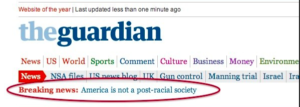
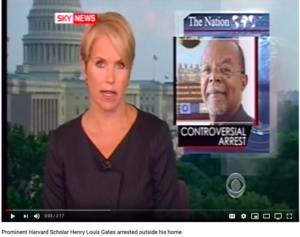
As for race relations in media technology, Obama’s platform as first black president saw some political and racial backlash from those who felt he wasn’t doing enough to further the African American race relations, and might have been tempered by perceptions of racial nepotism. How could this be prevented when the spotlight remained on his being “the first black president in the entire history of our democracy” (165). The public always does this: first woman, first Asian, first Hispanic, etc. We celebrate or mourn such milestones, depending on which side of the competitively charged event one is on. There’s always a winner and a loser, and this precludes everyone from celebrating a success. Whoever wins is a success, despite how it’s perceived. The internet and IT are successful in their endeavors of instantaneous ability to create and extend the rhetoric of each’s multi-faced debate. We all win in our ability to participate in this technological diversity. Furthermore, one’s ability to easily create and distribute memes and opinion-addled exposes with racial rhetoric that, for example, surrounded Obama’s historic achievement as first black president, can elevate the issue to heightened debate. In the world of a fast moving technological dumping ground, it’s a dance that you sometimes lead, and others are pulled through the ringer. Perhaps we are in need of regulatory action, as laws prevent anarchy, but stifle some individual freedoms. What’s the alternative?
Everett, Anna. “Have We Become Post Racial Race Yet? Race and Media Technology in the Age of President Obama.” Race After the Internet.” Routledge, 2012, 146-167.
Liberman, Mark. “Lexical Obamanations”. Language Log. University of Pennsylvania, 1 Dec, 2010. http://languagelog.ldc.upenn.edu/nll/?p=2814