farewell, spring 2019

we’ve come a long way this semester, from learning about the history of digital technologies, the early days of the internet, and all the rapid changes and shifts that have happened since, to thinking now about the futures of our digital lives. how are we choosing to interact with all the digital culture around us? how are we participating with, creating, and being created by that culture?

there’s so much more we could discuss about these questions! but our 16 weeks are up, and hopefully this taste of studying, analyzing, and critiquing digital culture will stay with you for whatever convergences of old, new, digital, and analog you might face in the months andyears to come.

The internet IS fake!

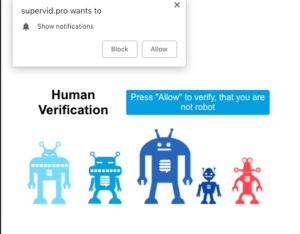
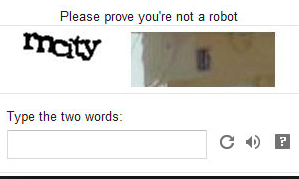
After reading about the bots that are programmed to mimic humans, I instantly thought of how some websites require you to verify that you are indeed human.  The author mentions this in the article as well, but it is quite annoying when I have to concentrate on selecting just the right square with the storefront in order to match all of the correct squares to verify my human status.  Most times I’m racing against the clock to get the best seats on Ticketmaster, and of course, I click on the wrong box!

The mention of “click farms” was also intriguing because this has recently become a thing of interest in pop culture.  A rapper by the name of J. Cole mentions this in the lyrics of a song that he was featured in.  I would post a snippet of the song, but a few of the other lyrics may offense to some.  His lyrics question the validity of some of the most popular rappers of today and their streams.  He raps, “How many faking they streams? (A lot) Getting they plays from machines (A lot)”.  A popular comedian has also mentioned this new phenomenon and has made an Instagram post that shows the actual machines as they were hooked up to iPods, or iPhones as they constantly streamed.  Even those that aren’t into conspiracy theories seeing click farms in action should be alarming and are cause for questioning the authenticity of everything on the internet or at the very least things that involve the use of a computer to function.

Educating via Fortnite?

I was initially intrigued by this article because it had the title, “Fortnite” in it.  Fortnite is all the rage in middle school, if I don’t hear the name or read it in essays fifty times a day then I don’t hear or see it at all.  The scientist that was dismayed with her sons “fortnite” post garnered more views than her scientific post could possibly be attributed to people not wanting to read or hear about things that aren’t pleasant.  Most people turn to the internet to escape reality, and her post is too real.  Who wants to deal with the truth when it’s ugly and you play a role in making it that way?  I also think that most people viewed the idea of watching her webinar as work.  After viewing her webinar then most would likely feel obligated to do something about climate change, which would mean work on their part.  This line of thinking reminds me of reading the comments under Instagram posts, and seeing some commenters post the comment, “I’m only here for the comments”.  This likely means that they are only reading the comments of others for the entertainment value of it.

Technology’s hold on the Future

The world changes and we must change with it if we want to participate in the discussion. No other place is that clearer than in the use of technology, and specifically internet interactions. “ClimateFortnite” exemplifies this philosophy, and reminds us that it’s the audience that matters in preparing our discussion. Sometimes it’s easy to forget this as we get lost in our own learnedness. The idea of climate scientists playing a game with the younger generation in order to educate them could be more reflective of the future than we care to admit. In this of technology, with the attention spans shorter than ever, new modes of delivery in education are in need of some serious consideration.

How can students be expected to focus on the teacher or lecturer when our minds are being trained to multi-task and so many things are calling our attention. Back in the day, when I thought of something I wanted to look into, I would write it down as a reminder for later. Nowadays, even if I do that I’m itching to get my phone out for the immediate answer. I’m not alone in that.

George Dyson’s article “Childhood’s End” speaks to how smart computers have become, and we have learned to trust this technological treatise more than the human being imparting knowledge, and by which is by nature of limited capacity when compared to the binary power of the computer brain. Dyson states, “The search engine is no longer a model of human knowledge, it is human knowledge”. No defining human is providing all input, and the computer is becoming controller instead of categorizing and indexing human thoughts. This gives me pause for thought. As an educator, I want to use the means that technology affords:  expanded research capabilities, faster and more efficient processing of data, easier writing and proofing, and global instant communication and collaboration. These are using the system for the betterment of humanity. As science keeps developing, and science fiction has fictionalized it, we might become the pawns in the computer game. Is it fake reality, or is it a genuine reality; either way the question really is, which is actually in control, and what does it mean for the minds of the developing and future generations?

We have Cyberdyne and Skynet…but no Kyle Reese!

We have  Cyberdyne and Skynet, but where’s Kyle Reese to lead the Resistance?

We have watched this movie before. In 1984, literally, not the novel/film, we watched famed director and writer James Cameron present to us his cinematic masterpiece about a robot assassin who travels back in time to kill the woman whose son will become the hero and savior of human kind.

We also watched as the sequel about the reformed robot assassin who returns with the new mission of stopping technolgy that hasn’t been created from “outsmarting” the humans in the future. Yes, we were in awe of the cutting-edge special effects, CGI. Yes, we were even entertained by Arnold Schwarzenegger’s zany one liners and catch phrases.

In retrospect, did we all choose to  ignore the aggressively advancement of technology that seemingly plays out right before our eyes 30 years later?

Dyson’s “Childhood’s End” argues that during the digital revolution programmers wrote codes and now the codes “outcode” man. Meaning, man created the technology and technology became too sophisticated for man’s understanding and control.  I do not doubt we have brilliant minds fixated on advancing our technology and developing it to where it is functional enough. However, I will never buy into the notion that technology’s intelligence and functionality becomes fully independent of human.

If Dyson did not want to frighten readers with the nonexistence of human importance or human existence, then he would not have riddled this article with contentious phrases like “winner take all game”,  “arrival of benevolent Overloards”, “the new gatekeepers”, etc…so I do not buy into his ominous predictions of technological takeover.

I will wait for the next blockbuster sequel instead.

Prove You’re Not a Robot…No, Seriously


The thought that entered my mind after reading Read’s “How Much of the Internet is Fake?” is “prove you’re not a robot.”  Read’s article hit close to home, eerily. How often have we been prompted to prove our existence by some seemingly random box selection? Before this article, I thought that command was funny. I never took it seriously because I thought it was logically impossible for me to be a robot. This is not some Steven Spielberg movie where we cluelessly go about our day to day nonhuman existence not knowing that we are in fact robots, or is it?

On a more serious note, I am not surprised about digital ad-fraud report. It  makes sense that corporations would try to find ways to maximize and track consumer internet usage.  What I found more concerning about this section of Read’s article was the fact that somewhere  an unknown  number of people  have the ability to create technology that can “imitate humans: bots “faked clicks, mouse movements, and social network login information to masquerade as engaged human consumers.”  To me, that is one step closer to creating a robot that can mimic my thoughts and movements.  Perhaps I do watch too many James Cameron movies. Clearly they do as well.

It makes me wonder if we ultimately cause more harm by pushing our younger generations to STEM fields. They develop the skills to advance us technologically, yes but morally, what have we gained?

Fake metrics, fake people, fake business, fake content…The oxymoronic “counterfeit reality” is all too much.

Unfortunately for us, there is no omnipresent and all knowing Morpheus to serve us the “red-pill of pre-Inversion reality”.

Before you leave a comment on this blog post…..


Read, Max. 2018. “How Much of the Internet is Fake? Turns Out, a Lot of It, Actually.” New York Magazine / Intelligencer.http://nymag.com/intelligencer/2018/12/how-much-of-the-internet-is-fake.html

Machine

Dyson’s commentary in Edge provides the proper ending (and periodical name) for this semester.

While Dyson doesn’t specifically reference “The Modern History of Computing,” he walks us through a similar, yet darker, evolutionary process. In the beginning, we made machines to do our work. We called them computers at some point, yet they were really tools to perform work on our behalf. And the computers got better at performing work … now they’re so good at it they provide for needs we didn’t know we needed (my watch told me how often I stood up today).

When do the computers become alive? That’s not the question, Dyson argues.

I recall my earlier post about cells becoming tissues, tissues becoming organs, organs becoming systems, and systems becoming humans. A cell is a living, autonomous, being, just doing its thing in its own universe. Yet every cell is part of this collection we call a human being, bestowing us with collective intelligence. 

Up until now, we seem to have had the notion that building the perfect robot or android or intelligent computer took a top-down approach. We thought computers would be the brain and send commands to the rest of the bot and take in sensory information, etc. But that’s not how human systems work at all. Most of the commands in our body aren’t made consciously. And that intelligence reaches far deeper than autonomous commands. The brain doesn’t tell cells to divide. The brain doesn’t tell white blood cells to attack infection. The brain doesn’t even get involved when we accidentally touch a hot pot and quickly jerk away. We are a collection of autonomous beings and, in that light, our brain looks like less of a king and a kingdom and more of a tour guide and a theme park.

That’s the role of computers in Dyson’s vision (nightmare?). In Dyson’s understanding, humans have become the cells of the computer system. We’re parts of the whole and our behavior creates the collective intelligence of the system, much like the behavior of cells in our own bodies.

“The search engine is no longer a model of human knowledge, it is human knowledge,” he writes as I think of how often police look up someone’s recent search terms if they’ve transgressed a law. Even our questions add to the intelligence of the system. And the system (or enterprise, or computer) knows us better each time we use it, eerily guessing what we’ll search for next based on countless bits of data it has gathered about us … and everyone.

When we were kids we used to proudly exclaim, “I knew you’d do that!” when we accurately predicted what one of our friends would say or do next. It was an accomplishment to know someone well enough to make such predictions.

Now Google knows what we’ll search. Facebook knows who we’ll like. Amazon knows what we’ll buy. Spotify knows what we’ll listen to. And here’s a fun one … Tesla has equipped all of its cars with every sensor necessary for full autonomous driving and – when its drivers have made enough journeys, dodged enough accidents, and recorded enough information being absorbed by Tesla’s AI – they plan to turn on automated driving in every vehicle.

Nearly every science fiction fan has discussed the ability of machines to become intelligent to the point of becoming human. We thought we would play god and create life. We thought we would build that machine to be our friend. We thought we might build that machine to be our slave. We thought we might build that machine to solve our problems.

But we didn’t build that machine. 

We became it.


Dyson, George. 2019. “Childhood’s End.” Edge. https://www.edge.org/conversation/george_dyson-childhoods-end

“The Modern History of Computing.” 2000. Stanford Encyclopedia of Philosophy.
https://plato.stanford.edu/entries/computing-history/


Presence in a Digital Minefield

Digital natives, what an interesting term. When I think of natives, I think of someone indigenous to the area. In this context, we are all, and none of us, are digital native. Yes, I understand the explanation that it describes those who have always had this technology in their lives, but I beg to differ as this being an accurate description. Maybe it’s a case of digitalitis that I am suffering from, or could it be technologicaleosis. Either way, I may have to get a ITectomy.

Before having mental circumcision let’s talk about Anna Everett’s chapter in Race After the Internet, “Have We Become Post Racial Race Yet?”. This article speaks of digital natives supporting a political platform that embraced the internet. Technology and politics go together. In order to reach the masses, and accumulate power, government and/or commerce need to use the means that reaches the widest audience. 24/7/365 news reporting is the way to go. Gone is “breaking news” because it’s all breaking news, at break-neck speed. Pair that with the UGC explosion, and there’s a flood of information (and misinformation) at the ready. As mentioned in the article, Dean Howard’s campaign embraced technology with a meteoric rise in popularity until he went a little crazy and this same outlet that supported his journey also supported his fall, as this outlet can help and hurt the object of attention (149).

This idea is supported by the obamaisms. Some of these were beneficial, and some were not, and some were downright offensive. Obama was fully engaged in digital media’s technological highway for his campaign, fully embracing the extent of it’s potential at the time, but Donald Trump has trumped his adoption and taken it to a higher level. Donald Trump’s incessant use of social media is bashed by some, and lauded by others. Another example of mixed use and acceptability is Obama’s prefix. As displayed in my first paragraph, this type of play on words (names) isn’t new. My first recollection of this politically was Reaganomics, and after reading many comments on Mark Liberman’s post on Language Log’s Lexical Obamanations, a blog put out by University of Pennsylvania, it’s clear that this is not a new phenomenon.

As for race relations in media technology, Obama’s platform as first black president saw some political and racial backlash from those who felt he wasn’t doing enough to further the African American race relations, and might have been tempered by perceptions of racial nepotism. How could this be prevented when the spotlight remained on his being “the first black president in the entire history of our democracy” (165). The public always does this: first woman, first Asian, first Hispanic, etc. We celebrate or mourn such milestones, depending on which side of the competitively charged event one is on. There’s always a winner and a loser, and this precludes everyone from celebrating a success. Whoever wins is a success, despite how it’s perceived. The internet and IT are successful in their endeavors of instantaneous ability to create and extend the rhetoric of each’s multi-faced debate. We all win in our ability to participate in this technological diversity. Furthermore, one’s ability to easily create and distribute memes and opinion-addled exposes with racial rhetoric that, for example, surrounded Obama’s historic achievement as first black president, can elevate the issue to heightened debate. In the world of a fast moving technological dumping ground, it’s a dance that you sometimes lead, and others are pulled through the ringer. Perhaps we are in need of regulatory action, as laws prevent anarchy, but stifle some individual freedoms. What’s the alternative?

Everett, Anna. “Have We Become Post Racial Race Yet? Race and Media Technology in the Age of President Obama.” Race After the Internet.” Routledge, 2012, 146-167.

Liberman, Mark. “Lexical Obamanations”. Language Log. University of Pennsylvania, 1 Dec, 2010.  http://languagelog.ldc.upenn.edu/nll/?p=2814


Who’s Going to Run the Show

As stated by Eleanor Roosevelt way back when, “with freedom, comes responsibility”. Applying this to an enigmatic entity such as the internet was definitely not what she had in mind when she uttered this phrase but as I read Lissig’s tome I couldn’t stop thinking about how aptly it is applied to the nether regions of cyberspace. The next question addressed is “Who’s responsibility is it?” In an arena that is “free”, and digital expression is achieved essentially at the flick of a wrist, how is this societal freedom controlled without controlling individual freedoms. Lessig quoted John Parry Barlow, of the The Grateful Dead, that cyberspace is “the new home of the mind” (3). The struggle for physical utopia extends to embrace a new search for digital utopia, on that maintains ideals of equality and freedom of expression in a mogul-free enterprise. Can we though? Can we have perfect freedom and perfect control? Are they mutually exclusive or interdependent?

Lessig tackles this question, and although he leans toward the assumption that it is possible to have both. I’m not sure myself, but as Lessig is an expert, and he puts forth the argument that since cyberspace isn’t nature, that it’s constructed; that since it’s not organic, it can be built to how we want it to be (5). As I considered this premise, I thought about how it has not been constructed with a plan-o-gram. I thought about how it has been organically grown, and without any regulation it has been like a garden, where people come into the space and plant trees, flowers, vegetables, etc. and they are left to their own devices. Eventually weeds start popping up, filling the spaces where conditions and availability apply, and as they are left unchecked, so is a sense of order and control.

Lessig claims “we should expect – and demand – that it can be made to reflect any set of values that we think important. The burden should be on the technologists to show us why that demand can’t be met” (32). This a great expectation, but as users, who don’t understand back-end technology, our expectations are limited by the capacity to understand technologies limitations. As we know, tractability exists, so it should be used. The problem is what are the limits to this power, and not only the known investment of manpower and technological capabilities, but also the unknown costs associated with this mammoth feat. Is this a private sector initiative? Is the scope too large for the private sector? “Government is the natural answer, but Lessig states “that we have lost faith in their ability, the people and the government alike” (322). With that in mind, it would seem that things, as they often do, will continue as status quo.

Lessig, Lawrence. Code and Other Laws of Cyberspace: Version 2.0. Basic Books, 2006.


The Natives are Restless

I’m an immigrant in a world of digital natives. I didn’t grow up with a digital second life (not the platform, the actual second life people live on the internet’s variety of platforms). I did, however, grow up when it first began to gain steam.

When I was a kid, we watched Tron and dreamed it could become reality. In the movie, Kevin Flynn (played by Jeff Bridges) gets zapped (they call it digitized) into a video game. The special effects were great at the time but would make any of today’s teens laugh. Yet I can’t think of a better visual representation of what happens when they pick up their phones. Maybe blue laser lights don’t fly out of the phone and make the kid disappear into a virtual world, but if you had to draw what happens to the energy that animates them when picking up a smart phone, you’d be hard pressed to create a better visualization than Tron’s zap sequence. What was once a living, breathing human being, is now living in a digital world. They’re not with us in the physical realm. The lights are on, but nobody’s home.

Tron wasn’t the first or last film to picture humans crossing over to the digital world and it makes me wonder if this was all part of the human dream to begin with. Were we humans actually dreaming of a version of this when we conjured imagery of boats crossing rivers, three-headed guard dogs, and gods weighing our souls against feathers before entering the afterlife? If you look at people who’ve crossed over into the internet through the River Styx of their phones, you might say that their physical form is rather lifeless (though not covered in goo, the way the Matrix writers imagined it).

Switching gears, slightly …

Everett’s observations about politics and race are on point. Activists in the digital world put Obama in the White House. It’s the first time both a black president was elected and a digital constituency made it happen. And therein lies the double-edged sword. As Everett points out, the opposite side of the hope, and togetherness, and “Yes we can” digital blade is a harsh, and violent, and racist edge. 

One of my favorite evolutions of the cliché “sports builds character” is the clever verbal judo of the phrase “sports does not build character, it reveals it.” In this instance, substitute sports with the internet.

We praised the hacker’s ethic only to have it revealed that the concept was less ethical and more hack-like than previously expressed.

We marveled at the possibility that some quiet kid in Ann Arbor, Michigan could secretly gain a following of readers who loved to imagine torturing women.

These are all stories of people who live in two worlds. How they behave, perhaps even who they are, is different than the physical universe. 

It is Everett’s early distinction between digital natives and immigrants that compel us to think about how we’ve reached a point of total digital absorption. We’re crossing back and forth between two worlds to the degree that we’re creating ways to govern the new world (does that ring a historical bell?). Lessig describes the internet as a lawless wild west in need of some sense of order. Well, we’re going there. And by there, I mean that we’ve begun thanking the pioneers for their efforts as we begin taming the west by making laws about a world that only existed, heretofore, in science fiction. We are codifying its existence much like we codified the existence of the lawless west.

It’s because of this native/immigrant concept that, anecdotally, I’ve determined that, in our dual physical-digital existence that we now accept as reality, science fiction now outranks palm readers, meteorologists, and stock brokers as a more accurate predictor of the future. 

In this world, I’m an immigrant. And who lives there? Natives. 

Judging by the way we’ve treated natives in the past, I’m not placing any bets that they’ll come out on top.